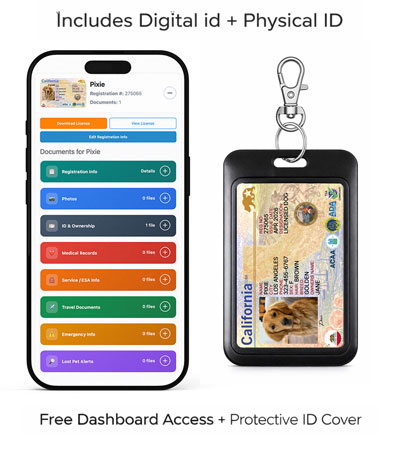
Franklin County Dog Registration Information
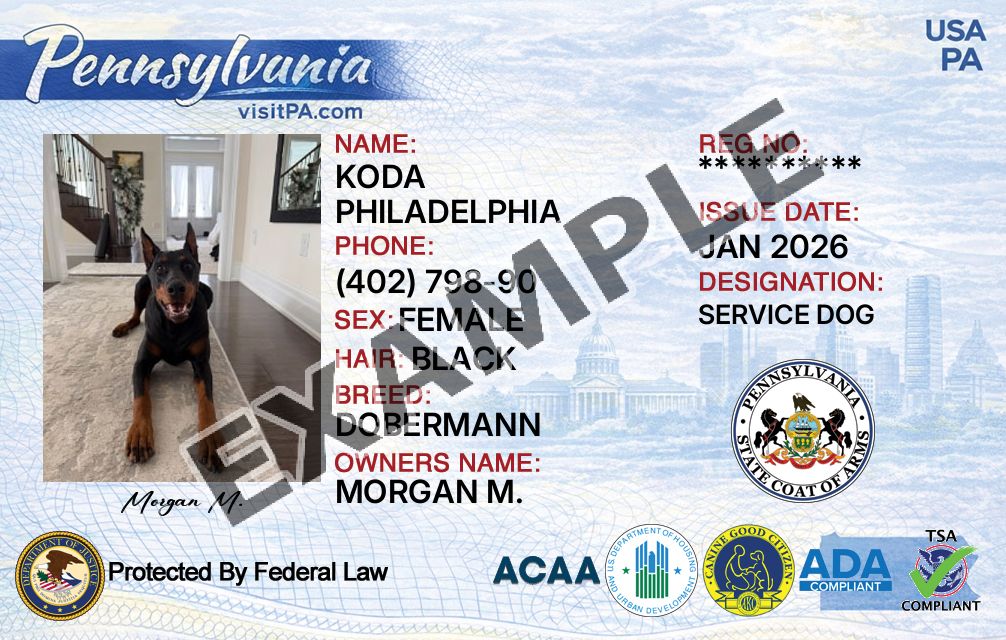
Service Dogs and Emotional Support Animals in Franklin, Pennsylvania
If you’re asking where do I register my dog in Franklin County, Pennsylvania for my service dog or emotional support dog, the key thing to know is that service dog status and emotional support animal (ESA) status are not the same as getting a dog license in Franklin County, Pennsylvania.
In Franklin County, dog “registration” typically means licensing your dog through the county treasurer, which is part of Pennsylvania’s statewide dog licensing system. This page explains how licensing works locally, what rabies rules apply, and how service dogs and ESAs fit into the picture.
- A dog license is a legal requirement for most dogs in Pennsylvania and is handled through local county offices.
- A service dog is defined by training to perform tasks for a person with a disability; there is generally no official “service dog registration” requirement under federal ADA rules.
- An emotional support animal (ESA) is mainly a housing concept under federal fair housing rules; it is not a service animal under the ADA.
Where to Register or License Your Dog in Franklin County, Pennsylvania
Because licensing is handled locally, start with the official county office that sells dog licenses. The offices below are official government contacts that relate to dog licensing and dog-law enforcement for Franklin County, Pennsylvania. (If an item isn’t shown, it wasn’t available from official sources and is intentionally omitted.)
Franklin County Treasurer’s Office (Dog Licenses)
| Address | 272 North Second Street, Suite 300 |
|---|---|
| City/State/ZIP | Chambersburg, PA 17201 |
| Phone | 717-261-3120 |
| treasurers@franklincountypa.gov | |
| Office hours | Monday–Friday, 8:30 a.m. – 4:30 p.m. (no sales after 4:00 p.m.) |
This is the primary place to obtain an annual or lifetime animal control dog license Franklin County, Pennsylvania residents need to comply with Pennsylvania dog law requirements.
Pennsylvania Department of Agriculture — Bureau of Dog Law Enforcement
| Office name | Bureau of Dog Law Enforcement (Commonwealth of Pennsylvania) |
|---|---|
| Phone | 717-787-3062 |
| ra-agdoglaw@pa.gov | |
| Office hours | Not listed (verify by phone/email) |
This state bureau oversees Pennsylvania dog law enforcement broadly (including licensing and rabies compliance), and works with wardens and local partners.
Franklin County State Dog Law Enforcement Officer (State Dog Warden Contact)
| Contact | State Dog Law Enforcement Officer (Franklin County contact listed by the county) |
|---|---|
| Phone | 717-762-9794 |
| Not listed (verify by phone) | |
| Office hours | Not listed (verify by phone) |
If your question is more about enforcement (loose dogs, kennel issues, bites, dangerous dog complaints, licensing compliance), this contact may be relevant in addition to the treasurer’s licensing office.
Overview of Dog Licensing in Franklin County, Pennsylvania
What “registering your dog” usually means
In day-to-day language, many residents say “register my dog,” but in Pennsylvania the legal requirement is to obtain a dog license in Franklin County, Pennsylvania through the county treasurer (or approved licensing agents). Licensing helps identify ownership and supports enforcement activities and animal welfare programs.
When a license is required
Pennsylvania requires dogs to be licensed at the point of purchase/adoption (the earliest is 8 weeks old) or by 3 months of age, whichever comes first. Licenses are generally issued on an annual basis for the calendar year (January 1 through December 31), even if purchased later in the year.
Annual vs. lifetime dog licenses
Franklin County offers annual licenses and lifetime licenses. Lifetime licenses typically require permanent identification (such as a microchip or tattoo) and specific verification paperwork. If you’re comparing options, the annual license is often simplest to start with, while lifetime licensing can be convenient if your dog already has permanent ID.
How Dog Licensing Works Locally in Franklin County, Pennsylvania
Step-by-step: where to register a dog in Franklin County, Pennsylvania
- Confirm rabies vaccination status with your veterinarian and keep your rabies certificate or proof available.
- Choose a license type (annual vs. lifetime).
- Submit your application and payment locally through the Franklin County Treasurer’s Office (in person or by mail). Some counties also offer online options; however, this page emphasizes official offices and avoids directing you to third-party vendors.
- Attach the license tag to your dog’s collar as required, and store your paperwork with your records (especially helpful if you move, travel, or need proof for housing or local compliance questions).
Why licensing is local (and why that matters)
Dog licensing is a statewide requirement, but it’s administered locally through county treasurers and approved agents. That’s why the most accurate answer to where to register a dog in Franklin County, Pennsylvania is: start with the Franklin County Treasurer’s Office in Chambersburg.
Rabies vaccination requirements (Pennsylvania)
Separate from dog licensing, Pennsylvania requires rabies vaccination for dogs (and cats) once they are 3 months of age or older, and they must be kept current according to vaccine and booster rules. Rabies compliance is important for public health and can become a key issue after bites or exposure incidents.
Service Dog Laws in Franklin County, Pennsylvania
Service dog status is not a “county registration”
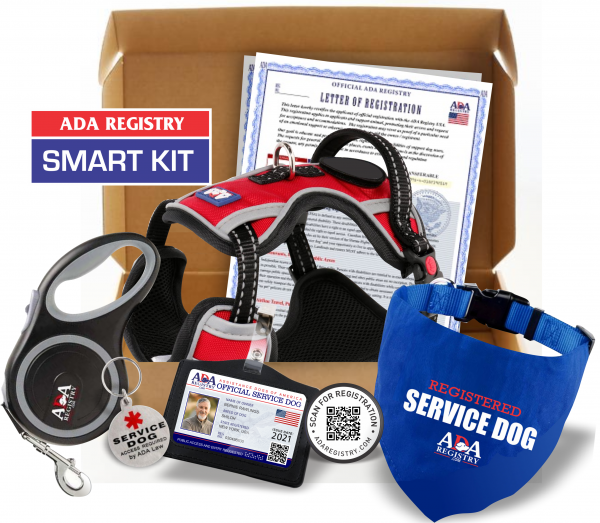
If you have a service dog in Franklin County, you still typically need a dog license in Franklin County, Pennsylvania like any other dog (unless a specific exemption applies). However, service dog legal status is based on what the dog is trained to do, not on buying a vest, ID card, or online “registration.”
ADA definition (what counts as a service animal)
Under federal ADA guidance, a service animal is generally a dog that is individually trained to do work or perform tasks for an individual with a disability. Comfort or emotional support alone does not qualify as a service animal under the ADA.
What businesses can ask (and what they cannot)
In many public settings, staff are typically limited to two questions: whether the dog is required because of a disability, and what work or task the dog has been trained to perform. They cannot require documentation, demand the dog demonstrate tasks, or ask about the person’s disability. Even with full legal access rights, service dogs must still be under control and housebroken.
Emotional Support Animal Rules in Franklin County, Pennsylvania
ESA vs. service dog: the practical difference
An emotional support animal (ESA) is not the same as a service dog. ESAs generally do not have broad public-access rights under the ADA, even if they help with anxiety, depression, PTSD, or other conditions. That means an ESA is usually treated like a pet in restaurants, stores, and other public accommodations unless another law applies.
Where ESAs matter most: housing
ESAs most commonly come up in housing situations. Federal housing guidance recognizes “assistance animals,” which can include animals that provide emotional support that alleviates one or more effects of a disability. In many cases, a housing provider may need to consider a reasonable accommodation request when the request is disability-related and properly supported.
Important reminder: ESA paperwork does not replace licensing
Even if your dog is an ESA, you still need to follow local requirements for a dog license in Franklin County, Pennsylvania and keep rabies vaccinations current. ESA documentation is about housing accommodations; it is not the same thing as an animal control dog license Franklin County, Pennsylvania authorities recognize for licensing compliance.
Frequently Asked Questions
Usually yes. A service dog is still a dog, and licensing requirements generally apply. The difference is that service dog status is about task-training for disability mitigation, while the dog license in Franklin County, Pennsylvania is a local legal requirement handled through the Franklin County Treasurer.
Go to the Franklin County Treasurer’s Office in Chambersburg, which handles dog licensing locally. If your concern is enforcement (stray dogs, dangerous dog issues, kennel complaints), the county also lists a contact phone for the State Dog Law Enforcement Officer.
For ADA public-access purposes, service dogs are not established by registering with a county office. Public-access rights generally come from the dog being individually trained to perform disability-related tasks. However, you still may need local licensing through the county treasurer like any other dog.
Keep your rabies vaccination certificate or veterinary proof available. Pennsylvania requires rabies vaccination for dogs once they are 3 months old and older, and keeping documentation is especially important if you need to show compliance after a bite or exposure concern.
No. ESA documentation (when valid) is primarily used for housing accommodation requests. It does not replace the local requirement to obtain an animal control dog license Franklin County, Pennsylvania residents use to comply with state dog licensing rules.
Disclaimer: Licensing requirements and office locations may change. Residents should verify details with their local animal services office within Franklin County, Pennsylvania.
Register A Dog In Other Pennsylvania Counties
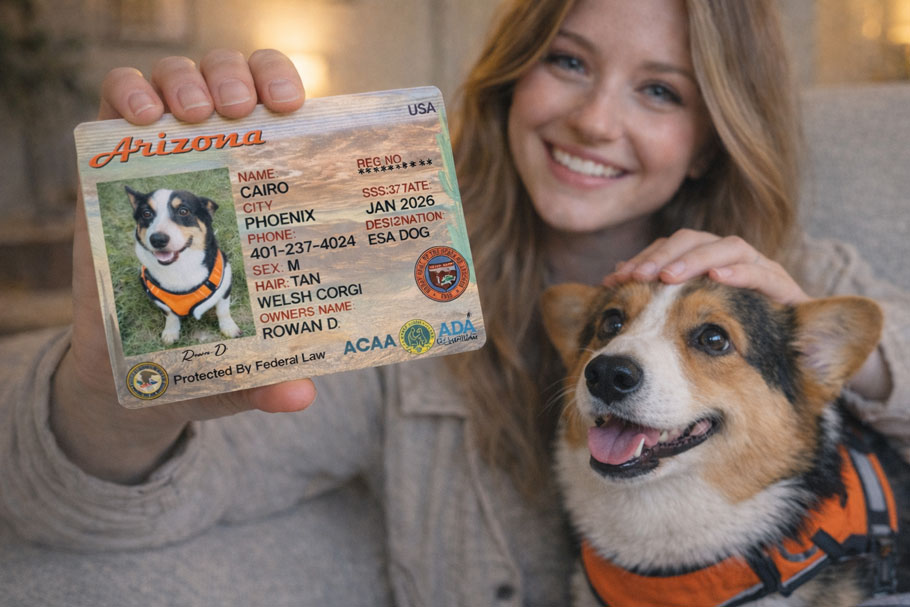
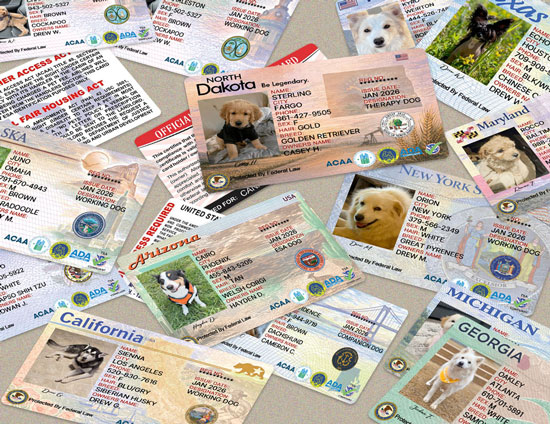
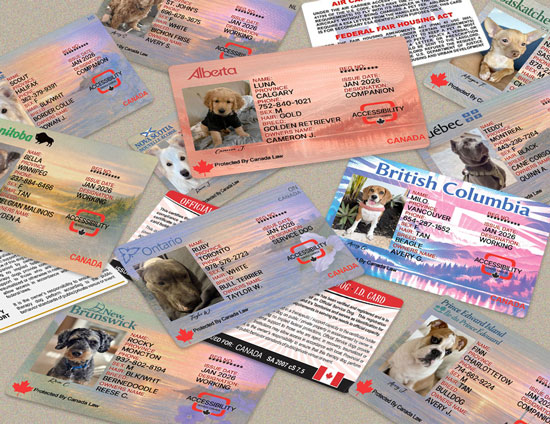
Select your county below to get started with your dog’s ID card. Requirements and license designs may vary by county, so choose your location to see the correct options and complete your pup’s registration.
- Adams County Dog Registration
- Alleghany County Dog Registration
- Armstrong County Dog Registration
- Beaver County Dog Registration
- Bedford County Dog Registration
- Berks County Dog Registration
- Blair County Dog Registration
- Bradford County Dog Registration
- Bucks County Dog Registration
- Butler County Dog Registration
- Cambria County Dog Registration
- Cameron County Dog Registration
- Carbon County Dog Registration
- Centre County Dog Registration
- Chester County Dog Registration
- Clarion County Dog Registration
- Clearfield County Dog Registration
- Clinton County Dog Registration
- Columbia County Dog Registration
- Crawford County Dog Registration
- Cumberland County Dog Registration
- Dauphin County Dog Registration
- Delaware County Dog Registration
- Elk County Dog Registration
- Erie County Dog Registration
- Fayette County Dog Registration
- Forest County Dog Registration
- Fulton County Dog Registration
- Greene County Dog Registration
- Huntingdon County Dog Registration
- Indiana County Dog Registration
- Jefferson County Dog Registration
- Juniata County Dog Registration
- Lackawanna County Dog Registration
- Lancaster County Dog Registration
- Lawrence County Dog Registration
- Lebanon County Dog Registration
- Lehigh County Dog Registration
- Luzerne County Dog Registration
- Lycoming County Dog Registration
- McKean County Dog Registration
- Mercer County Dog Registration
- Mifflin County Dog Registration
- Monroe County Dog Registration
- Montgomery County Dog Registration
- Montour County Dog Registration
- Northampton County Dog Registration
- Northumberland County Dog Registration
- Perry County Dog Registration
- Pike County Dog Registration
- Potter County Dog Registration
- Schuylkill County Dog Registration
- Somerset County Dog Registration
- Sullivan County Dog Registration
- Susquehanna County Dog Registration
- Synder County Dog Registration
- Tioga County Dog Registration
- Union County Dog Registration
- Venango County Dog Registration
- Warren County Dog Registration
- Washington County Dog Registration
- Wayne County Dog Registration
- Westmoreland County Dog Registration
- Wyoming County Dog Registration
- York County Dog Registration